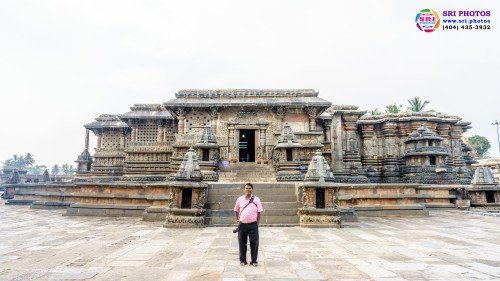
Sala Banjikas (Madanikas) of the Chennakesava Temple, Belur
The Chennakesava Temple at Belur in Hassan district, Karnataka, is one of the finest achievements of Hoysala architecture and a cornerstone of the UNESCO World Heritage Site known as the Sacred Ensembles of the Hoysalas. Commissioned in 1117 CE by King Vishnuvardhana to commemorate his victory over the Cholas and his embrace of Vaishnavism, the temple is celebrated for its star-shaped plan, soapstone carvings, lathe-turned pillars, and narrative friezes. Among its most iconic features are the Sala Banjikas, also known as Madanikas, Madanakai, or Shilabalikas — exquisite bracket figures of celestial maidens that embody the pinnacle of Hoysala sculptural artistry.
Historical and Cultural Context
The term Salabhanjika (or Sala Banjika) originates from Sanskrit, referring to a woman standing under or breaking a branch of the sala tree (Shorea robusta). This motif has deep roots in Indian art, appearing as early as the Buddhist stupas of Sanchi and Bharhut, where it symbolised fertility, auspiciousness, and the life-giving power of nature. In the Hoysala period (11th–14th centuries), these figures evolved into highly refined decorative and symbolic elements, often placed as angled brackets supporting the eaves or springing from pillar capitals. At Belur, the Madanikas were likely added during the later stages of the temple’s construction in the early 12th century. They became a hallmark of Hoysala temples and were later copied at other sites, such as the Brahmeshvara Temple at Kikkeri. Local tradition holds that the figures were inspired by the legendary beauty and dancing prowess of Queen Shantala Devi, the accomplished consort of Vishnuvardhana. Whether or not this is historically accurate, the sculptures clearly reflect the refined courtly culture, aesthetic ideals, and artistic patronage of the Hoysala court. Many of the figures carry inscriptions at their bases naming the sculptors — among them Dasoja, Chavana, Malloja, and others — along with titles that suggest royal recognition of their skill. These signatures provide rare insight into the professional identity and mobility of medieval Deccan artisans.
Number, Placement, and Description
Scholarly counts vary slightly, but the most widely accepted figure is 42 Madanikas in total: approximately 38 on the exterior walls (originally around 40, with a few lost or damaged) and 4 inside the navaranga (pillared hall). The exterior figures are positioned at an angle above the perforated stone screens (jalis), appearing to lean outward as if greeting devotees during circumambulation (pradakshina). The four interior figures adorn the capitals of the central pillars beneath the ornate ceiling. Carved from soft chloritic schist (soapstone) that hardens over time, the sculptures display extraordinary realism and technical virtuosity. Each figure is unique in posture, expression, jewellery, hairstyle, and attire. Many stand in the classical tribhanga (three-bend) pose or other stances drawn from the Natya Shastra. Common themes include:
Darpana Sundari (Lady with the Mirror) — the most celebrated, shown gazing into a hand-held mirror with lifelike detail in her jewellery and anatomy.
Shuka Bhashini (Lady with the Parrot) — a woman whispering to or listening to a parrot, with individual feathers of the bird finely rendered.
Huntresses holding bows, dancers in various abhinaya (expressive) mudras, musicians playing instruments, women applying makeup or arranging their hair, and figures under flowering trees or vines.
Some carvings include remarkable miniature details: a fly on a fruit, a lizard about to pounce, movable stone jewellery (bracelets and necklaces that can still be gently shifted), and intricate coiffures with hundreds of distinct styles across the temple’s broader sculptural programme.
Artistic and Symbolic Significance
The Madanikas transcend mere decoration. As salabhanjikas, they evoke the ancient association of the feminine form with fertility and the awakening of nature. In the temple context, they also embody shringara (aesthetic beauty and love), auspiciousness, and the idealised grace of celestial beings (apsaras or devanganas). Their placement at transitional points — between pillars and eaves, or along the circumambulatory path — guides the devotee’s gaze and creates a dynamic visual rhythm. Artistically, they represent the Hoysala mastery of hyper-realism. Sculptors achieved a remarkable balance of sensuality and dignity, capturing movement, emotion, and texture in stone with a delicacy that remains unmatched. The figures also serve as a visual record of contemporary fashion, jewellery, dance, and courtly life in 12th-century Karnataka.
Present Status and Experience
The Chennakesava Temple remains an active place of worship as well as a major heritage site. Visitors can still view the Madanikas in their original positions, though some exterior figures show signs of weathering or past damage. The temple complex is protected under the Archaeological Survey of India and forms part of the UNESCO World Heritage listing. A careful walk around the temple reveals the full ensemble of these celestial maidens. In the soft light of morning or late afternoon, the soapstone carvings take on a warm glow, and the intricate details — a slight smile, the curve of a wrist, the delicate folds of a garment — come alive. Many consider the Madanikas the emotional and aesthetic heart of Belur, transforming stone into poetry and elevating the temple from a royal monument into a living celebration of beauty, devotion, and human skill.The Sala Banjikas of Belur stand as enduring testimony to the genius of Hoysala sculptors — graceful, expressive, and eternally youthful, they continue to captivate all who encounter them nearly nine centuries after they were carved.
Photography by Suresh K Volam | Sri Photos : http://www.sri.photos