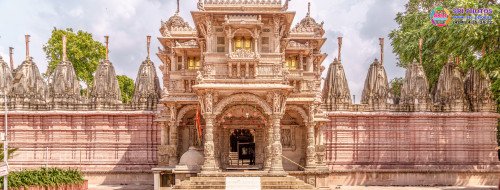
Hutheesingh Jain Temple (Hutheesing Temple), Ahmedabad, Gujarat, India
The Hutheesingh Jain Temple, also spelled Hutheesing or Hathisingh Jain Temple, is one of the most magnificent and architecturally significant Jain temples in Ahmedabad, Gujarat. Located just outside the historic Delhi Darwaza (Delhi Gate) on Shahibaug Road in the Bardolpura-Madhupura area, this white-marble masterpiece stands as a landmark of 19th-century Gujarati Jain patronage. Dedicated primarily to the 15th Tirthankara, Lord Dharmanatha, the temple is renowned for its exquisite fusion of traditional Māru-Gurjara temple architecture with elements inspired by local wooden havelis. Often described as one of the finest examples of creative regionalism, it continues to serve as a vibrant centre of Śvetāmbara Jain worship while attracting architecture enthusiasts and tourists from around the world.
Historical Background
The temple’s story is one of devotion, resilience, and philanthropy. In the mid-19th century, Sheth Hutheesing Kesarisinh, a wealthy and prominent Jain merchant-trader of Ahmedabad, conceived the idea of building a grand Jain temple. He envisioned it not only as a place of worship but also as a means to provide employment to hundreds of skilled artisans during a severe famine that had struck Gujarat. Hutheesing passed away at the young age of 49 before the project could be completed. His determined third wife, Shethani Harkunwar (also known as Harkunvar Shethani), took charge of the construction, supervising every detail with remarkable resolve. Under the guidance of master architect and craftsman Premchand Salat, the temple was completed in 1848 after about two years of intensive work.
The total cost at the time was approximately ₹8–10 lakh—a colossal sum equivalent to roughly ₹75 crore or over US$8–9 million in today’s value. Contemporary accounts, including those by Lockwood de Forest (a business associate of the family), described the expenditure as “over a million dollars.” The temple was built during a period when Ahmedabad’s Jain merchant community was flourishing through trade, and it quickly became a major religious and cultural hub for the Śvetāmbara Jain community. It is managed by a family trust of the Hutheesing descendants to this day.
Architectural Grandeur
The Hutheesingh Temple is a stunning example of 19th-century Gujarati architecture that creatively blends ancient temple traditions with domestic haveli elements. Built entirely of white marble, the structure rises to a height of approximately 52.5 metres (about 172 feet) and is a classic nirandhara-prasada type (without an internal ambulatory passage around the sanctum). The temple faces west and is elevated on a wide platform. It follows a linear arrangement of three main spaces: the garbhagriha (sanctum) at the eastern end crowned with three ornate shikharas (spires), the gudhamandapa (closed shrine hall) with a large ridged dome supported by twelve richly decorated pillars, and the sabhamandapa (assembly hall). Expansive protruding porches with ornate columns and figurative brackets adorn three sides, creating dramatic light-and-shadow effects.
A standout feature is the main gateway porch, which incorporates wooden haveli-inspired elements translated into stone—carved balustrades, overhanging balconies (jharokhas), chabutras (raised platforms), and intricate jali (lattice) screens. The walls and pillars are profusely carved with floral motifs, dancers, musicians, mythical creatures, Tirthankara figures, and scenes from Jain scriptures. The overall design draws strong parallels with earlier masterpieces such as the temples at Bhadreshwar and Ranakpur, while adapting vernacular Gujarati domestic architecture into a sacred context. The complex includes 52 small shrines (upashrayas) housing additional Jain images, a large courtyard with cloisters, and a prominent six-storey Manastambha (pillar of honour) inspired by Jain victory towers, which houses a statue of Lord Mahavira. The temple’s interiors feature stunning marble floors with inlay work and ceilings that showcase masterful craftsmanship.
Cultural and Religious Significance
As a Śvetāmbara Jain temple, Hutheesingh is dedicated to Lord Dharmanatha, the 15th Tirthankara. It serves as an important centre for daily rituals, prayers, and major Jain festivals, particularly Mahavir Janma Kalyanak (Lord Mahavira’s birth anniversary). The temple complex, known as Hutheesing-ni-Wadi, also includes gardens, guesthouses, and smaller shrines, functioning as a self-contained spiritual oasis within the bustling city.
Beyond religion, the temple symbolises the philanthropic spirit of Ahmedabad’s Jain merchants and their role in preserving and innovating artistic traditions during challenging times. Its construction provided crucial livelihood to artisans, turning adversity into a lasting monument of faith and creativity.
Present Status and Visitor Experience
The temple remains an active place of worship managed by the Hutheesing family trust. It is generally open from 9:00 AM to 12:00 PM and 5:00 PM to 7:00 PM daily. Entry is free, though photography is not permitted inside the main temple to maintain sanctity. Visitors are expected to dress modestly, remove footwear, and maintain silence in the prayer areas.
A typical visit begins with the grand exterior view, followed by exploration of the carved porches, courtyard shrines, and the serene main sanctum. The white marble glows ethereally in morning or evening light, and the detailed carvings reward slow, attentive observation. The surrounding wadi offers a peaceful retreat with gardens and additional shrines. Many visitors combine it with other Ahmedabad heritage sites such as the nearby Jama Masjid, Sabarmati Ashram, or the old city pols.
The Hutheesingh Jain Temple endures as a radiant jewel of Ahmedabad’s heritage—a harmonious dialogue between ancient sacred forms and 19th-century Gujarati domestic elegance. Its soaring marble spires, intricate stonework, and profound spiritual atmosphere continue to inspire devotion, artistic appreciation, and quiet reflection more than 175 years after its completion.
Photography by Suresh K Volam | Sri Photos: https://www.sri.photos/