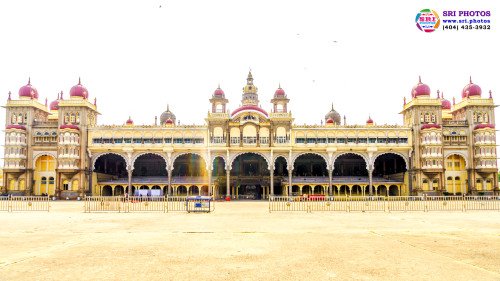
Mysore Palace (Amba Vilas Palace), Mysore, Karnataka, India
The Mysore Palace, officially known as Amba Vilas Palace, is one of India’s most magnificent royal residences and a defining symbol of Karnataka’s cultural heritage. Located in the heart of Mysore (Mysuru) city, this sprawling Indo-Saracenic masterpiece stands as the largest of the seven palaces in the city and served as the official seat of the Wadiyar (Wodeyar) dynasty, who ruled the Kingdom of Mysore for over 600 years. With its majestic domes, ornate interiors, and vibrant Dasara illuminations, the palace attracts over four million visitors annually, making it one of the most visited monuments in India.
Historical Background
The history of Mysore Palace is intertwined with the rise and resilience of the Wadiyar dynasty. The first palace on this site is believed to have been constructed in the 14th century by Yaduraya Wadiyar, the founder of the dynasty. Over the centuries, multiple structures rose and fell due to fires, lightning strikes, and political upheavals. A significant wooden palace was built in 1803 after Tipu Sultan reportedly demolished an earlier structure. However, tragedy struck again on the night of 23 February 1897, when a devastating fire—allegedly sparked during a wedding ceremony—destroyed much of the palace. Maharaja Krishnaraja Wodeyar IV, then a minor, along with his mother, the Queen Regent Kempananjammanni Devi, decided to rebuild on a grander scale. British architect Henry Irwin was commissioned in 1897 to design the new palace, blending Indian and European aesthetics. Construction began that year and was completed in 1912 at a cost of approximately ₹41.5 lakhs (a substantial sum at the time). The palace remained the official residence of the Wadiyars until India’s independence in 1947. After the abolition of princely states, the palace came under the care of the Government of Karnataka, though a portion continues to be used by the royal family. Today, it functions primarily as a museum and cultural landmark while preserving the living traditions of the Wadiyar lineage.
Architectural Grandeur
Mysore Palace is a stunning example of Indo-Saracenic architecture, a 19th-century revivalist style that harmoniously fuses Hindu, Rajput, Islamic (Mughal), and Gothic elements. Designed by Henry Irwin, the three-storey structure is built primarily of grey granite with pink marble domes and stands approximately 145 feet tall at its highest gilded dome. The palace features square towers at the cardinal points, arched windows, balconies with jharokhas, and a central five-storey tower crowned by a golden dome visible from afar. The exterior presents a majestic yet harmonious silhouette, while the interiors reveal breathtaking opulence:
- Durbar Hall: The grand public audience hall features ornate ceilings, sculpted pillars, and Belgian crystal chandeliers. It was used for royal ceremonies and state functions.
- Kalyan Mantapa (Marriage Pavilion): This magnificent hall boasts a stunning stained-glass ceiling (imported from England), glazed tiled flooring, and intricate peacock motifs. It was primarily used for royal weddings and celebrations.
- Royal Living Quarters: The Residential Museum section displays personal artifacts, paintings, furniture, and royal memorabilia, offering a glimpse into the luxurious lifestyle of the Wadiyars.
- Golden Howdah and Throne: Among the palace’s greatest treasures is the jewel-encrusted golden throne, traditionally displayed during Dasara. The golden howdah (elephant seat) used in processions is another highlight.
The palace complex also encompasses twelve Hindu temples, including the Shweta Varahaswamy Temple, lush gardens, and courtyards where cows are still tended, preserving an old-world charm.
Cultural Significance and Dasara Celebrations
Mysore Palace is the epicentre of the world-famous Mysuru Dasara (Dussehra) festival, a ten-day celebration of victory of good over evil. During Dasara, the palace is illuminated with nearly 97,000 light bulbs, creating a magical golden spectacle that draws massive crowds. The grand procession (Jumbo Savari) featuring the golden howdah on a caparisoned elephant starts from the palace, continuing a tradition that dates back centuries. The palace complex symbolises the cultural synthesis of Karnataka—blending royal patronage of arts, music, and literature with deep-rooted Hindu traditions.
Present Status and Visitor Experience
Managed by the Government of Karnataka in partnership with the Wadiyar family, the palace is open to visitors from 10:00 AM to 5:30 PM daily. Entry fees are modest for Indian visitors, with higher charges for foreigners (including an audio guide). Photography is not permitted inside the palace to preserve the sanctity and artifacts. Visitors typically spend 1.5 to 2 hours exploring the halls, museum, and grounds. The palace comes alive in the evenings on Sundays and public holidays with special illuminations. Audio guides and guided tours enhance the experience, providing deeper historical context.
A visit to Mysore Palace is not merely a tour of grand architecture—it is a journey through Karnataka’s royal legacy, where every carved pillar, stained-glass window, and gilded dome tells stories of power, patronage, resilience, and cultural pride. Standing proudly in the heart of Mysore, the palace continues to captivate hearts as a living monument to India’s princely past and an enduring icon of Karnataka’s rich heritage.
Photography by Suresh K Volam | Sri Photos: https://www.sri.photos/