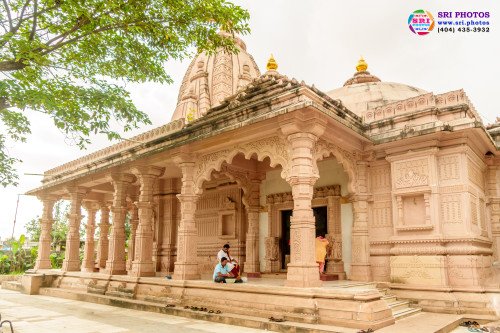
Balka Temple, Ban Ganga
The Balka Temple (also known as Bhalka Tirth or Bhalka Teerth; Gujarati: ભાલકા તીર્થ), located near Ban Ganga on the Arabian Sea coast in Veraval, Gir Somnath district, Gujarat, India, is a significant Hindu pilgrimage site associated with the final earthly moments of Lord Krishna. Situated approximately 5 km from the famous Somnath Temple along the Prabhas-Veraval Highway, the temple complex stands in a serene coastal setting with banyan and peepal trees, marking the sacred spot where Krishna is believed to have been accidentally struck by an arrow and left his mortal body, marking the transition from the Dwapara Yuga to the Kali Yuga.
Historical and Religious Importance
According to the Mahabharata and Bhagavata Purana, after the great Kurukshetra war, Lord Krishna retired to the forest near Prabhas (modern Somnath region). While resting under a tree in a meditative posture, a hunter named Jara mistook Krishna’s foot (which resembled a deer’s ear) for game and shot an arrow, fatally wounding him. Krishna forgave Jara, revealed his divine form, and ascended to his eternal abode (Vaikuntha or Goloka). This event is commemorated at Bhalka Tirth.
The site is closely linked to nearby Ban Ganga (Baan Ganga), where legend says Lord Rama once shot an arrow (baan) into the ground to bring forth holy water (Ganga) for rituals. The area forms part of the larger Prabhas Kshetra, one of the holiest tirthas in Gujarat, and is managed under the broader Somnath pilgrimage circuit by the Shree Somnath Trust. The temple has been revered for centuries and attracts devotees seeking blessings for forgiveness, peace, and spiritual liberation.
Architectural Significance
The present Balka Temple is a relatively modest yet elegant structure built in the traditional Gujarati style with sandstone elements. It features a simple garbhagriha (sanctum) housing an unusual semi-reclining murti of Lord Krishna, depicting the moment he was struck by the arrow. Another idol shows Krishna in tribhangi pose playing his flute, a classic Vaishnava representation.
Key features include:
- A sacred banyan tree and tulsi plant in the courtyard, symbolising the original forest setting and Krishna’s association with nature.
- Intricate carvings on pillars and walls depicting scenes from Krishna’s life, the hunter Jara seeking forgiveness, and episodes from the Mahabharata.
- An open mandapa for congregational prayers and a peaceful ambiance that blends devotion with the nearby coastal landscape.
The architecture is not as grand as the nearby Somnath Temple but emphasises simplicity and emotional resonance, allowing devotees to connect directly with the poignant narrative of Krishna’s departure.
Present Status and Visitor Experience
The Balka Temple is an active shrine maintained with support from local authorities and the Somnath Trust. Daily rituals, aartis, and bhajans are performed, with special observances during Janmashtami, Mahashivratri, and the annual Rath Yatra season. Visitors often combine the visit with nearby sites such as Ban Ganga (where two ancient swayambhu Shivlingas on the rocky shore are washed by the sea during low tide), the Triveni Sangam (confluence of the Hiran, Kapila, and Saraswati rivers), and the majestic Somnath Temple.
The experience is deeply moving: devotees offer prayers at the Krishna murti, circumambulate the sacred trees, and reflect on themes of karma, forgiveness, and impermanence while enjoying the sea breeze and coastal views. The site remains relatively less crowded than Somnath, offering a quiet, contemplative atmosphere ideal for spiritual seekers and history enthusiasts.
The Balka Temple at Ban Ganga endures as a poignant reminder of Lord Krishna’s leela—a sacred tirtha where divine play meets human frailty, inviting pilgrims to contemplate life’s transient nature amid the eternal rhythm of the Arabian Sea and the timeless devotion of Gujarat’s sacred coast.
Photography by Suresh K Volam | Sri Photos: https://www.sri.photos/