Hoysaleswara Temple, Halebidu - Album 4
Overview
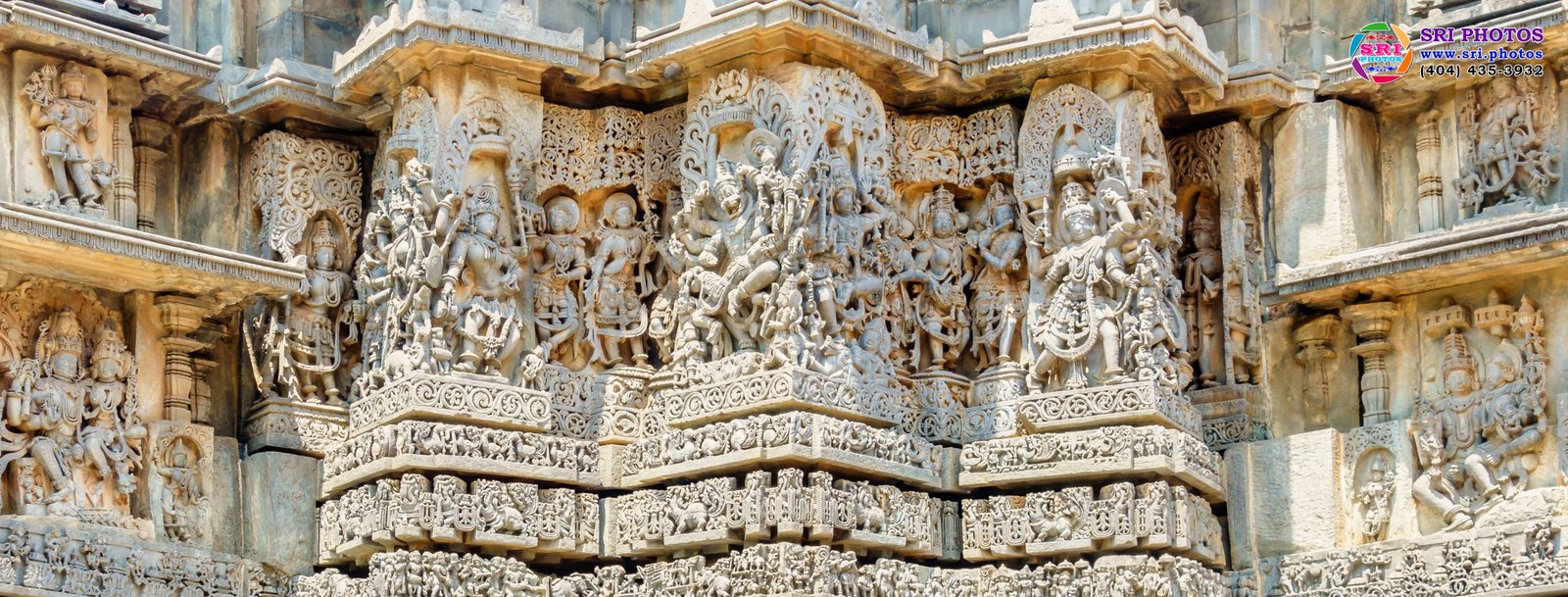
The Hoysaleswara Temple in Halebidu, Karnataka, constructed between 1121 CE and 1160 CE, is celebrated for its unparalleled sculptural program, a hallmark of Hoysala artistry. Dedicated to Shiva, this dvikuta temple in the former capital of Dwarasamudra features over 1,000 reliefs and panels, making it one of India’s most intricately decorated temples. Managed by the Archaeological Survey of India (ASI), it is a proposed UNESCO World Heritage Site.
Sculptural Program
The temple’s exterior is a canvas of soapstone carvings, with eight horizontal friezes encircling the walls. These include:
• Elephants: Over 1,000 in varied poses, symbolizing strength.
• Lions: Alternating with elephants, representing courage.
• Scrollwork: Floral and vine motifs showcasing precision.
• Horses: Depicting royal cavalry.
• Mythological Scenes: Narratives from the Ramayana, Mahabharata, and Bhagavata Purana.
• Dancers and Musicians: Reflecting Hoysala cultural patronage.
• Erotic Motifs: Subtle mithuna figures symbolizing prosperity.
Above the friezes, 340 large panels depict deities like Shiva (Nataraja, Gajasurasamhara), Vishnu, Durga, and Ganesha, alongside apsaras and gandharvas. Jain Tirthankaras, influenced by Queen Shantala Devi, highlight religious pluralism. The carvings, signed by artisans like Ketana, exhibit dynamic compositions and fine detailing, visible even after centuries.
Interior Artistry
The navaranga features lathe-turned pillars with geometric and floral patterns, supporting a ceiling with high-relief depictions of Shiva and Parvati. The twin sanctums, housing Shiva Lingams, are adorned with sukhanasi carvings of celestial beings. Two 9-foot Nandi statues, carved from single stones, guard the entrance, their polished surfaces and expressive features epitomizing Hoysala skill.
Cultural Role
The temple’s sculptures served didactic and devotional purposes, narrating epics and glorifying Hoysala patronage. Performances in the mandapa brought the dancer friezes to life, while festivals like Maha Shivratri animate the temple today.
Visitor Experience
Located 31 km from Hassan, the temple is open from 6:30 AM to 9:00 PM. Visitors should use magnifying glasses to appreciate the carvings’ details, with guided tours enhancing understanding. The ASI museum nearby displays related artifacts.
Photography by Suresh K Volam | Sri Photos | https://www.sri.photos/