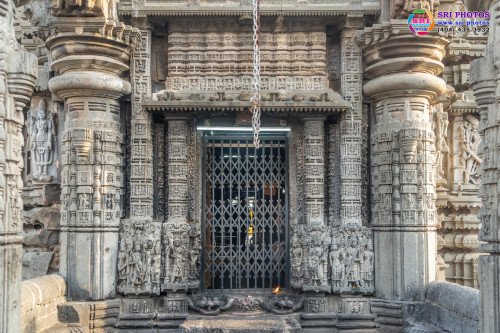
Aundha Nagnath Temple, Aundha Nagnath
The Aundha Nagnath Temple (Marathi: औंदा नागनाथ मंदिर), also known as Shri Aundha Nagnath Jyotirlinga, is an ancient Shiva temple located in Aundha Nagnath village, Hingoli district, Maharashtra, India. Situated about 25 km from Hingoli town, 61 km from Nanded, and 204 km from Aurangabad, it is revered as the eighth of the twelve Jyotirlingas—sacred self-manifested lingas of Lord Shiva—making it one of the most important pilgrimage sites in Maharashtra alongside Trimbakeshwar, Grishneshwar, Bhimashankar, and Parli Vaijnath. Spread over approximately 60,000 square feet, the temple complex includes the main shrine, 12 miniature Jyotirlinga temples, 108 smaller Shiva shrines, and 68 additional subsidiary shrines, creating a vast spiritual enclave amid rural surroundings.
Historical Importance
Legends trace the temple's origins to the Mahabharata era, claiming that Yudhishthira (Dharmaraja), the eldest Pandava, built the original shrine during the Pandavas' 14-year exile to atone and seek Shiva's blessings. The site is thus considered one of the "adya" (foremost) Jyotirlingas in some traditions. The present structure was largely rebuilt in the 13th century by the Seuna (Yadava) dynasty, a period of prolific temple construction in Maharashtra. It suffered partial destruction during later invasions, including attempts attributed to Mughal forces (with folklore recounting a miraculous swarm of bees repelling attackers). The temple was restored and renovated in the 18th century by the Peshwas and notably by Queen Ahilyabai Holkar of Indore, a devout Shiva bhakta who revived many sacred sites across India. Saints like Namdev and Visoba Khechara are associated with the shrine, underscoring its deep roots in Maharashtra's Bhakti movement. The temple remains a living centre of worship, drawing massive crowds during Mahashivratri and Vijayadashami.
Architectural Significance
The temple exemplifies Hemadpanthi architecture, named after Hemadri (Hemadpant), the Yadava minister and scholar who pioneered this style in the 13th century. Characterized by mortarless construction using precisely cut black basalt stone, massive pillars, and intricate carvings, Hemadpanthi temples are known for durability and elaborate detailing.
Key features include:
- Layout and Structure: The main shrine features a sunken garbhagriha (sanctum) accessed by two deep steps below ground level, housing the Jyotirlinga. The temple rises about 60 feet, with the lower portions retaining the original 13th-century Yadava Hemadpanthi base (walls, sanctum, and pillars), while the upper shikhara (spire) and portions reflect later Maratha/Peshwa-era reconstruction in a more ornate style.
- Carvings and Ornamentation: Exquisite stone reliefs cover pillars, walls, and doorways, depicting mythological scenes, floral motifs, dancers, elephants, and Shaiva icons. The craftsmanship showcases the Hemadpanthi hallmark of interlocking stone blocks without mortar, ensuring longevity.
- Unique Elements: The Nandi bull statue faces away from the linga (behind the shrine), a rare deviation from convention whose reason remains enigmatic. Surrounding the main temple are 12 small replicas of the other Jyotirlingas, plus numerous Shiva shrines, enhancing the site's sanctity as a microcosm of all 12 Jyotirlingas.
The blend of ancient Hemadpanthi foundation and later Maratha additions creates a layered architectural narrative, reflecting Maharashtra's evolving temple traditions.
Present Status and Visitor Experience
Protected under state heritage care and managed by temple authorities, Aundha Nagnath remains an active place of worship with daily rituals, abhishekam, and special pujas. It sees peak crowds during Mahashivratri (grand chariot processions) and Vijayadashami, when pilgrims bathe in nearby tanks and offer prayers. Visitors enter a spacious courtyard, descend to the sanctum for darshan of the Jyotirlinga, and explore the subsidiary shrines. The rural setting, with surrounding hills and open spaces, offers a peaceful contrast to busier Jyotirlinga sites. Facilities include basic accommodations for pilgrims and vegetarian eateries nearby.
Aundha Nagnath Temple endures as a profound spiritual beacon in Maharashtra—an ancient Jyotirlinga where epic legend, Yadava artistry, and enduring devotion converge, inviting pilgrims to experience Shiva's divine presence amid exquisite stone craftsmanship and timeless sanctity.
Photography by Suresh K Volam | Sri Photos | https://www.sri.photos/