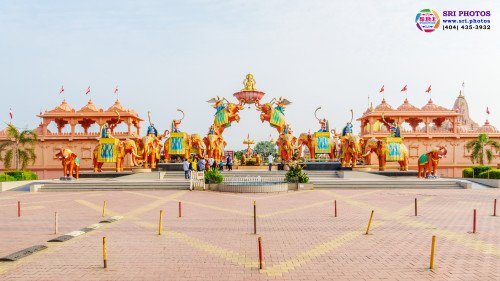
Nilkanthdham, Poicha
Neelakantha Dham, commonly known as Nilkanthdham Swaminarayan Temple (Gujarati: નીલકંઠધામ), is a grand modern Hindu temple complex and spiritual-cultural campus located in Poicha village, Sinor taluka, Vadodara district, Gujarat, India. Situated on the southern bank of the Narmada River, approximately 60–65 km from Vadodara, 80 km from Bharuch, and conveniently positioned along the route to the Statue of Unity (about 40–50 km away), the temple is dedicated to Bhagwan Swaminarayan in his youthful Nilkanth Varni form—the wandering ascetic phase of his life. Opened to the public in 2013, Nilkanthdham stands as a monumental expression of Swaminarayan devotion, blending traditional Hindu architecture with contemporary scale and facilities.
Historical and Religious Importance
The temple draws inspiration from the life of Lord Swaminarayan (1781–1830), who as a teenager undertook a seven-year pilgrimage across India as Nilkanth Varni, enduring extreme hardships before establishing the Swaminarayan Sampradaya. The name "Neelakantha" (Blue-Throated One) also evokes Lord Shiva's mythological act of drinking poison during the Samudra Manthan, symbolising self-sacrifice and compassion—qualities mirrored in Swaminarayan's teachings of devotion, moral living, and service.
The project was spearheaded by the Shri Vadtal Swaminarayan temple lineage (affiliated with the Vadtal gadi), with construction beginning in the early 2000s and culminating in its inauguration around 2013. It was envisioned as a major pilgrimage destination in central Gujarat, especially for devotees traveling to the Narmada Parikrama or the nearby Statue of Unity. The complex promotes Swaminarayan principles through daily rituals, satsangs, educational exhibits, and community welfare activities, attracting lakhs of visitors annually from Gujarat, Maharashtra, Rajasthan, and beyond.
Architectural Significance
Nilkanthdham is celebrated for its majestic scale and intricate craftsmanship, constructed primarily from pink sandstone (often described as "pink stone") and marble, following ancient Sthapatya Shastra (traditional Hindu architectural science) principles. The main temple rises as a towering structure with multiple spires, domes, and ornate carvings, creating a breathtaking silhouette against the Narmada backdrop.
Key features include:
- Main Shrine: The central garbhagriha houses the principal murti of Bhagwan Swaminarayan as Nilkanth Varni, flanked by shrines for Radha-Krishna, Ram-Sita-Hanuman, and other deities. The sanctum is adorned with detailed stone reliefs depicting episodes from Swaminarayan's life, the Ramayana, Mahabharata, and Puranic stories.
- Carvings and Ornamentation: Over 11,000 artisans contributed millions of man-hours to hand-carve every element—pillars, ceilings, brackets, and walls—with floral motifs, dancing figures, mythological scenes, and geometric patterns. The interlocking stone joinery ensures durability without heavy use of modern materials in visible areas.
- Artificial Pond and Surroundings: An expansive man-made lake encircles the temple, reflecting its spires and creating an island-like appearance. Landscaped gardens, pathways, and water features enhance the serene ambiance.
- Additional Structures: The complex includes a large assembly hall for discourses, exhibition areas showcasing Swaminarayan history through multimedia and models, a vegetarian restaurant, guest accommodations, and recreational facilities such as boating and children's play zones.
The architecture fuses elements of Nagara and contemporary Swaminarayan styles, with tall shikharas, elaborate jharokhas, and a harmonious blend of grandeur and devotion.
Present Status and Visitor Experience
Managed by a Swaminarayan trust, Nilkanthdham remains an active place of worship with multiple daily aartis, abhishekam, and bhajans. Entry to the temple and darshan is free, though charges apply for parking, exhibitions, boating, and other amenities. The complex opens early morning (around 5:30–6:00 AM) and closes in the evening (around 8:00–9:00 PM), with extended hours during festivals.
Visitors often arrive by road from Vadodara or the Statue of Unity corridor, experiencing a peaceful riverside setting ideal for spiritual reflection, family outings, and photography. The evening illumination transforms the temple into a glowing spectacle, while the Narmada's gentle flow adds to the meditative atmosphere. Popular activities include darshan of the main murti, exploring the life-of-Swaminarayan exhibits, enjoying boat rides on the pond, and savoring prasadam or meals at the on-site canteen.
Neelakantha Dham stands as a contemporary masterpiece of Swaminarayan devotion in Gujarat—a monumental tribute to spiritual resilience and divine grace, where the grandeur of pink sandstone architecture meets the tranquil flow of the sacred Narmada, offering devotees and visitors alike a profound sense of peace and inspiration.
Photography by Suresh K Volam | Sri Photos: https://www.sri.photos/