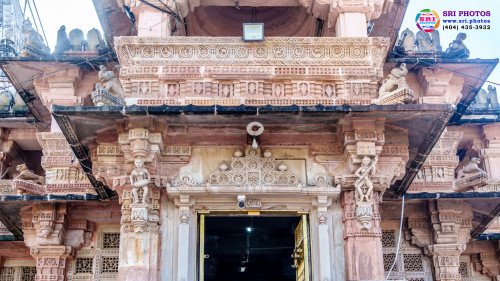
Shamlaji Temple, Shamlaji
The Shamlaji Temple (Gujarati: શામળાજી મંદિર), also known as Shamlaji Vishnu Mandir or Dholi Dhajawala (due to the white silk flag fluttering atop its dome), is a revered Vaishnava pilgrimage centre located on the banks of the Meshwo River in Shamlaji village, Aravalli district, Gujarat, India. Nestled in a lush, wooded valley amid the Aravalli hills, near the Gujarat-Rajasthan border and close to National Highway 8 (Ahmedabad-Udaipur route), the temple is dedicated to Lord Vishnu in his form as Shamlaji (or Gadadhar/Sakshi Gopal), a dark-complexioned deity often identified with Krishna. Regarded as one of the foremost Vishnu shrines in Gujarat, it attracts devotees from Gujarat, Rajasthan, and beyond, especially tribal communities who revere the deity as Kaliyo Dev (the Dark Divine).
Historical Importance
The site's religious antiquity dates back to at least the 6th-7th centuries CE, as evidenced by scattered ruins, ancient brickworks, idols, and fossils suggesting a prosperous ancient settlement. The black stone idol of Shamlaji in the sanctum is dated to the 7th-8th century, while nearby structures include a 6th-century Shiva shrine and the 9th-century Harishchandrani Chauri Temple (the oldest intact structure). Legends link the place to the Mahabharata era (as Harishchandrapuri) and various Puranic tales: one describes Brahma performing a thousand-year penance here, leading to Vishnu's manifestation as Shamlaji during a yajna; another claims Vishwakarma built the original temple in a single night; a third recounts a tribal farmer discovering the idol while ploughing, leading to its installation by a Vaishnava merchant and later beautification by the rulers of Idar state.
The present temple structure, begun possibly in the 11th century under the Chaulukya (Solanki) dynasty in the classic Maru-Gurjara style, was largely rebuilt or renovated in the 15th-16th centuries, as indicated by a 1584 inscription on a Garuda image. The region witnessed invasions and shifts in rule—from Solankis to Delhi Sultanate, Mughals, Marathas, and Idar princely state—but the temple endured, with later patronage from Idar rulers and Vaishnava committees. It remains a living shrine, with daily rituals and a grand annual fair (Shamlaji no Melo) on Kartik Poornima (October-November), drawing lakhs for bathing in the Meshwo, devotional singing, and commerce. Nearby archaeological sites, including the now-submerged 3rd-4th century Buddhist monastery and stupa at Devnimori (with Buddha relics), underscore the area's layered history as a multi-faith cultural hub.
Architectural Significance
The Shamlaji Temple exemplifies the Maru-Gurjara (Solanki/Chaulukya) architectural tradition, characterized by intricate sandstone carvings, ornate pillars, and harmonious proportions. The main structure is a two-storey edifice raised on a high plinth, with an open square courtyard on all four sides for congregational gatherings.
Key features include:
- Exterior Walls: Divided into horizontal friezes and bands featuring lions, elephants, mythological scenes from the Ramayana and Mahabharata, depictions of Vishnu, Lakshmi-Narayana, and episodes from the Bhagavata Purana. The carvings blend bold reliefs with delicate floral motifs, reflecting Solanki mastery.
- Sanctum and Idol: The garbhagriha houses the ancient black stone murti of Shamlaji (Gadadhar), a four-armed standing Vishnu holding mace (gada), discus (chakra), conch (shankha), and lotus (padma), with a later-added golden flute emphasizing Krishna aspects. Unique cow idols flank the deity, symbolizing Krishna's childhood as a cowherd—a rare feature in Krishna/Vishnu temples.
- Mandapas and Elements: The temple includes a sabha mandapa (assembly hall), antarala (vestibule), and ornate domed ceilings supported by carved pillars. Jali screens filter light, while makara-shaped pranalas (water spouts) add symbolic detail.
- Overall Style: Though initiated in the 11th century, the 15th-16th century reconstruction shows refined Indo-Aryan influences, with a towering shikhara and white flag adding visual drama against the green hills.
The architecture conveys both grandeur and simplicity, making it a favourite among archaeologists for its elegant craftsmanship.
Present Status and Visitor Experience
Protected and maintained by a trust with historical ties to Idar rulers, the temple is an active place of worship with regular aartis, bhog, and festivals. It opens early morning and closes in the evening, with a brief afternoon break. The serene riverside setting, forested hills, and nearby sacred pools (for ritual bathing) create a peaceful atmosphere, especially during sunrise or the monsoon when the Meshwo flows full.
Visitors often combine darshan with exploration of nearby sites like the Kashi Vishwanath Temple, Somnarayan shrine, or the Shyamalvan garden. The annual Kartik fair transforms the area into a vibrant mela with processions, music, and tribal devotion.
The Shamlaji Temple endures as a timeless beacon of Vaishnava faith in Gujarat—a harmonious blend of ancient sanctity, layered history, and exquisite Maru-Gurjara artistry, where the dark deity of Shamlaji blesses amid the tranquil beauty of river, hills, and devotion.
Photography by Suresh K Volam | Sri Photos: https://www.sri.photos/