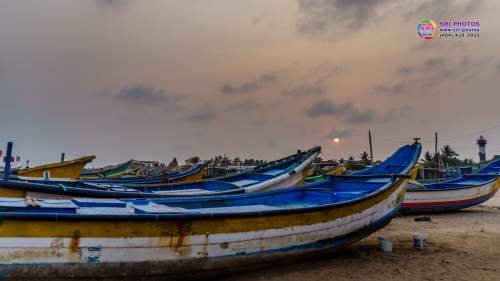
Vodarevu Beach, Chirala
Vodarevu Beach (Telugu: వోడరేవు బీచ్) is a serene, 9-kilometre-long stretch of golden sand located 8 km east of Chirala town in Bapatla district, Andhra Pradesh, India. Situated along the Bay of Bengal coastline between the mouths of the Uppugundur drain and the Musi River tributary, Vodarevu remains one of the least-commercialised beaches on the Coromandel Coast. Backed by casuarina plantations and dotted with black-stone fishing hamlets, the beach is known for its gentle gradient, moderate waves and striking sunrise views. Administratively part of Chirala mandal, it lies 55 km south of Guntur, 90 km south of Vijayawada and 110 km north of Ongole.
Historical and Cultural Importance
While Vodarevu itself has no ancient monuments, its location places it within the historic Andhra coastal belt that served as a maritime hub from at least the Satavahana period (2nd century BCE – 3rd century CE). Nearby Chirala, famous since medieval times for its handloom sarees (especially the fine Chirala khadi and silk varieties patronised by the Qutb Shahi and later Vijayanagara courts), supplied textiles that were exported through nearby ports such as Motupalli and Kothapatnam. Traditional Odiya-type wooden fishing boats and catamarans still launch daily from Vodarevu and neighbouring Ramapuram Beach, continuing centuries-old fishing practices. The annual festival of Sri Panduranga Swamy at the 19th-century temple in Vodarevu village (1 km inland) attracts thousands of devotees from coastal Andhra in the month of Ashadha (June–July), when decorated tractors and bullock carts bring pilgrims to the sea for ritual bathing. The beach gained modest prominence in the late 20th century when the Andhra Pradesh Tourism Development Corporation identified it as part of the “Emerald Coast” tourism circuit stretching from Bapatla to Vodarevu–Suryalanka. Despite plans for large-scale resorts in the 1990s and 2000s, local resistance and environmental concerns have kept development minimal, preserving its quiet character.
Geographical and Natural Features
Vodarevu presents a classic wave-dominated shoreline with fine quartz sand in shades of gold and light brown. The beach face is remarkably straight and gently sloping (1:50 to 1:80 gradient), making it safe for wading and swimming in most seasons. Dense groves of casuarina equisetifolia (savukku or sarugudu maram) planted in the 1970s by the Forest Department act as natural windbreaks and create shaded walking paths parallel to the shore. A low ridge of red laterite soil lies immediately behind the casuarina belt, beyond which lie coconut and cashew plantations. The area falls under the influence of both southwest and northeast monsoons, receiving an average annual rainfall of 900–1,000 mm. Winter mornings (December–February) frequently feature clear skies and temperatures of 18–25 °C, ideal for birdwatching; species commonly sighted include black-headed ibis, painted stork, spot-billed pelican and several terns that winter along this coast. Small brackish lagoons and seasonal creeks behind Ramapuram and Vodarevu villages support mangroves (mostly Avicennia marina) and serve as nurseries for prawns and mullets, sustaining the local fishing economy.
Present-Day Significance and Infrastructure
Vodarevu remains deliberately under-developed compared to more popular Andhra beaches such as Rushikonda or Manginagudi. Facilities are limited to:
- Haritha Beach Resort (AP Tourism) with 20 air-conditioned cottages and a restaurant overlooking the sea
- A few private budget resorts and homestays in Vodarevu and adjacent Ramapuram
- Basic shacks serving fresh catch-of-the-day (pomfret, seer fish, prawns) prepared in Andhra style
- A children’s park and short promenade constructed in 2018
The beach attracts mostly day visitors from Vijayawada, Guntur and Tenali, along with weekend families from Hyderabad. Sunrise photography, long walks and seafood meals are the primary activities. Motorable sand tracks allow vehicles almost up to the waterline during low tide, though four-wheel drives are recommended beyond the casuarina line. In recent years the Andhra Pradesh government has proposed a new deep-water port at Vodarevu under the Machilipatnam–Vodarevu Port Development Project, along with an adjacent industrial corridor. Environmentalists and local fishing communities have opposed large sections of the plan, citing threats to olive ridley turtle nesting sites recorded sporadically near Ramapuram.
Visitor Experience
A typical day at Vodarevu begins before dawn, when fishermen return with the night’s catch and auction it directly on the sand. By 6 a.m. the horizon turns molten orange as the sun rises over the Bay of Bengal, unobstructed by any headland. The wide beach remains largely empty except for morning walkers and occasional horse-cart rides. Mid-day brings gentle sea breezes and the rhythmic crash of moderate waves rarely exceeding 1.5 metres. Evenings are marked by spectacular crimson sunsets behind the casuarina silhouette and the sight of illuminated fishing boats heading out for the night. Vodarevu offers a rare combination of accessibility and solitude on India’s eastern coast—an unhurried shoreline where the traditions of coastal Andhra meet the quiet vastness of the Bay of Bengal, still largely untouched by mass tourism.
Photography by Suresh K Volam | Sri Photos : https://www.sri.photos/