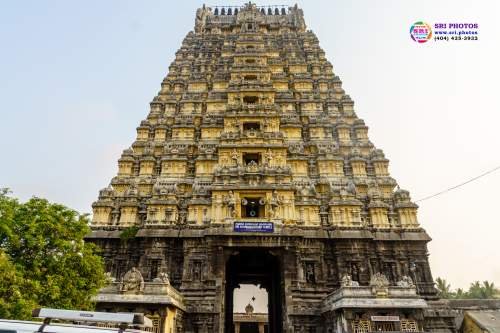
Ekambaranathar Temple, Kanchipuram
Opening Frame: Earth’s Eternal Tree
Kanchipuram’s morning haze parts, revealing the Ekambaranathar Temple, its 59-meter gopuram a jagged crown over 23 acres of sacred sprawl. This is Shiva’s domain, the earth element of the Panchabhoota Sthalams, where a 3,500-year-old mango tree roots the divine to the dirt. I step through the gateway, the air thick with camphor and chants, the ground vibrating with a history that predates empires. This isn’t just a temple—it’s a living relic, a testament to love, penance, and stone.
Historical Layers: From Pallavas to Vijayanagara
The temple’s story begins in the 6th century, when Pallava kings hewed its core from Kanchipuram’s soil. By the 9th century, Cholas expanded it, their inscriptions praising Shiva as Ekambareswarar—lord of the single mango tree. The Vijayanagaras, in the 16th century, crowned it with that soaring gopuram, a stucco riot of gods and demons. A 12th-century Tamil poet sang of its sanctity, calling it a “city of Shiva,” and today, its walls bear scars of invasions dodged—Muslim raids, colonial neglect—yet it stands, unbowed.
The Myth: Love Under the Mango
Locals recount the tale with a gleam: Parvati, separated from Shiva, crafted a lingam from earth beneath a mango tree here. Shiva, testing her, unleashed a flood; she clung to the lingam, saving it. Moved, he reunited with her, blessing this spot as eternal. That tree—gnarled, sprawling—still stands in the courtyard, its four branches symbolizing the Vedas, each yielding a distinct fruit: sour, sweet, bitter, astringent. Pilgrims pluck leaves, whispering prayers, believing it’s Parvati’s gift reborn.
Architectural Grandeur: A Stone Symphony
The gopuram hits first—192 feet of chaos, Vishnu wrestling serpents, Shiva mid-dance, all in peeling plaster. Inside, the temple unfurls like a stone labyrinth. The thousand-pillared hall mesmerizes—granite columns carved with lotuses, elephants, and hymns, their shadows shifting with the sun. The sanctum burrows deep, the Prithvi Lingam massive, unadorned, radiating an earthy hush. A priest pours water; it seeps into the stone, a ritual as old as the tree. Corridors stretch, lined with 1,008 smaller lingams, each a votive echo. Secret tunnels, now blocked, snake beneath—escape routes or ritual paths, no one’s sure. The courtyard sprawls, dotted with shrines: Vishnu as a peacemaker, Ganesha grinning. The mango tree looms central, its roots cracking stone, a living deity caged in iron grilles to shield it from eager hands.
The Pilgrimage: A Day in Devotion
Dawn cracks at 5 a.m., bells shattering the silence. I weave through pilgrims—some barefoot, others lugging coconuts—toward the sanctum. The air’s a soup of ghee and jasmine; priests chant Rudram, their voices a low roar. Inside, the lingam looms, oil-slicked, lamp-lit, a primal force. A woman ties a thread to the tree, her lips moving—fertility, health, who knows? Another offers milk, its steam curling skyward. The Thirumanjanam ritual unfolds—water, curd, sandalwood bathing the lingam, a sensory flood. By noon, the heat presses, but the hall’s shade cools; I sit, tracing pillar carvings, lost in their stories. Evening brings the Panguni Uthiram festival vibe—chariots roll yearly, but daily lamps mimic it, a glowing ring around the tree.
Beyond the Stone: Kanchipuram’s Pulse
Outside, Kanchipuram buzzes—silk looms clack, their threads dyed in temple reds. Vendors hawk vada and mango pickles, nodding at the tree’s fruit. A short trek leads to Kailasanathar, but Ekambaranath’s earthy pull lingers—Shiva’s roots run deep here, entwined with the town’s soul.
Final Glimpse: The Tree’s Whisper
Dusk drapes the gopuram in shadow, the tree a silhouette against it. I touch its bark—rough, ancient—and feel the earth breathe. Ekambaranath isn’t just Shiva’s home; it’s a pact between god and ground, sealed by a mango that’s seen empires rise and fall.
Photography by Suresh K Volam | Sri Photos : https://www.sri.photos