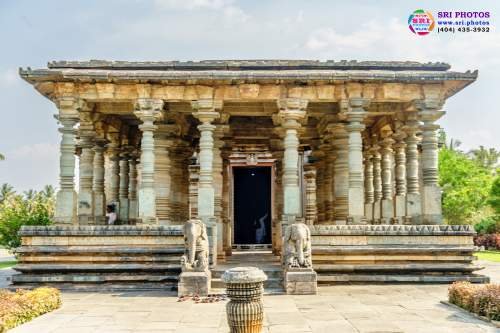
Jain Hoysala Complex, Halebidu
Jain Hoysala Complex is located in Halebidu, Hassan District of Karnataka in India. It consists of three Jain Basadis (Basti or temples) dedicated to Jain Tirthankars Parshvanatha, Shantinatha and Adinatha.These temples were constructed in the 12th century during the reign of Hoysala Empire.
Halebidu was the capital of the Hoysala Empire from 11th to 14th century CE when Jainism maintained a strong presence in the region. The region was called Dorasamudra or Dwarasamundra during the rule of Hoysala. Bittiga, is considered the greatest ruler of Hoysala kingdom and was a Jain till 1115 after which he converted to Vaishnavism (and named Vishnuvardhana) under the influence of the Ramanujacharya and recognized Jainism on par with Hinduism. These temples were later maintained by Maharaja of Mysore.
The Parshvanatha Basadi was built by Boppadeva in 1133. Boppadeva was the son of Gangaraja, a minister under Vishnuvardhana. The construction of the temple coincided with the victory of Narasimha I as the royal heir to the throne. The deity therefore is called Vijaya Parsvanatha. The Shantinatha Basadi was built around 1192 CE, during the reign of Veera Ballala II. The Adinatha Basadi is the smallest of the three and was also built in 12th century. A monolith of Bahubali which was present inside this temple is now displayed outside Halebidu museum. The Jain basadis are famous for architectural tradition.
These temples along with the capital were plundered and destroyed twice, by Malik Kafur, general of Alauddin Khalji during the Siege of Dwarasamudra in 1311 and by Sultan Muhammad bin Tughluq in 1326. The Wodeyar of Mysore and Ummathur (1399–1610), Nayakas of Keladi (1550–1763) were hostile Jains. In 1683, they stamped linga symbol in the main basadi of Jains in Halebid and Jains were forced to perform Shiva rites.
Photography & Videography by Sri Photos - https://www.sri.photos/